Overview
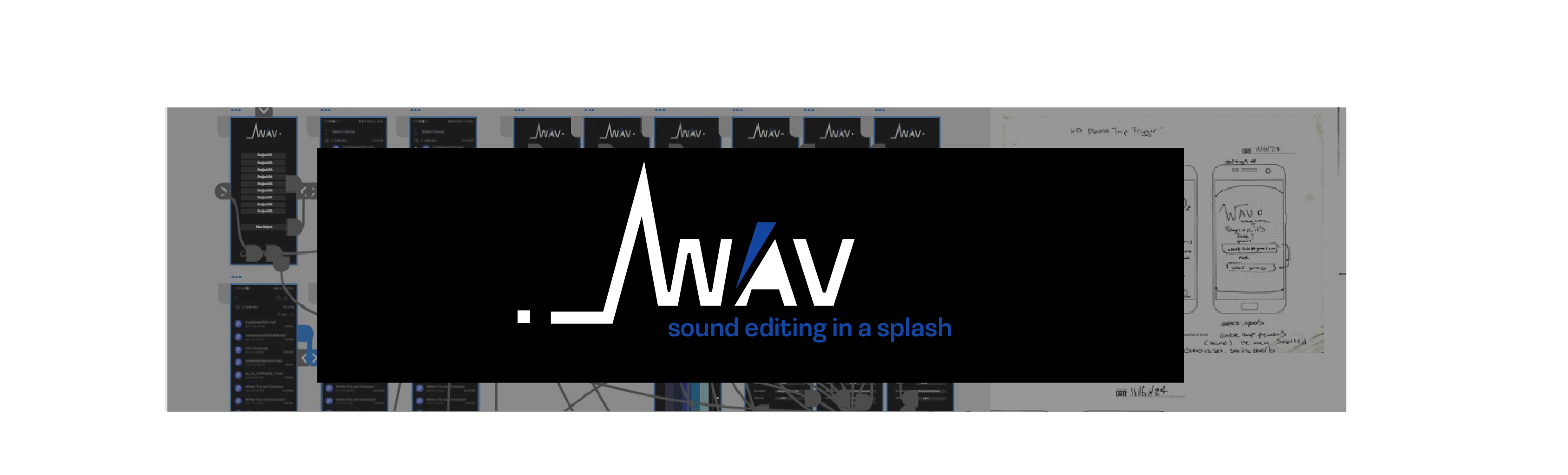
I redesigned an existing mobile app with a focus on rebranding, narrowing the feature set for a specific audience, and improving accessibility. I chose SuperSound, a mid-rated free music editing app, because I regularly edit audio myself and was already familiar with the challenges that come with mobile
music editing tools. That experience helped me quickly identify where the app created friction and slowed users down.
SuperSound’s core idea of fast audio editing was strong, but the execution worked against it. The interface was cluttered with too many features, making the editing process feel overwhelming rather than efficient. Tutorials were inconsistently placed and several design choices felt unintuitive, which made even basic tasks confusing.
For the redesign, I focused on creating a faster, more streamlined user flow by reducing the app to its most essential features. Because this version functioned differently from the original, it needed its own identity. I developed a new wordmark and visual direction to clearly communicate the app’s purpose and position it as a fully free, accessible alternative to other music-editing apps on the market.
Timeline
1.5 Months, 2024
Role
UX/UI Designer, Researcher, Graphic Designer
Tools
Adobe XD, Adobe InDesign, Adobe Illustrator, Adobe Photoshop
Research, Persona Creation
User Research
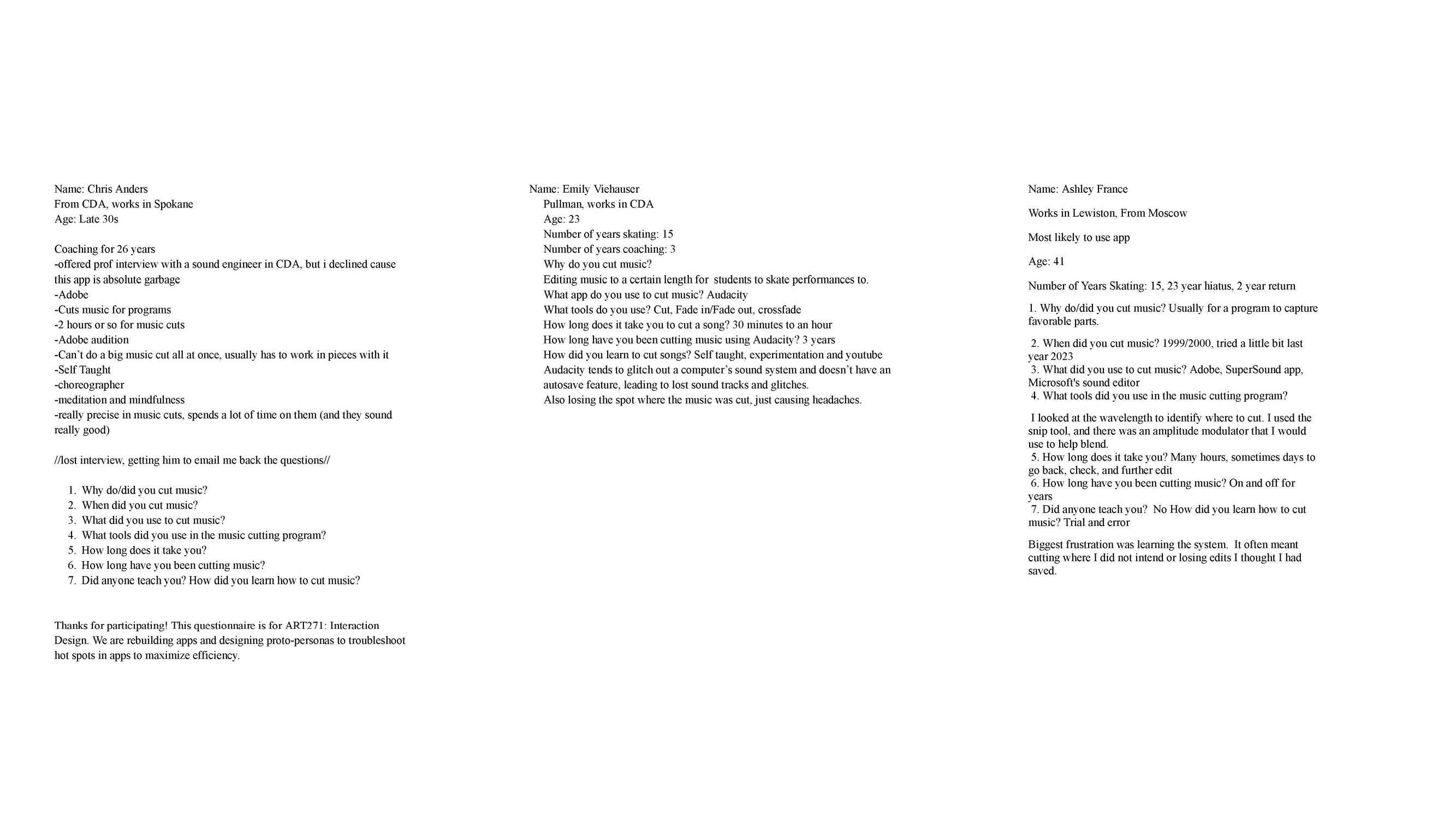
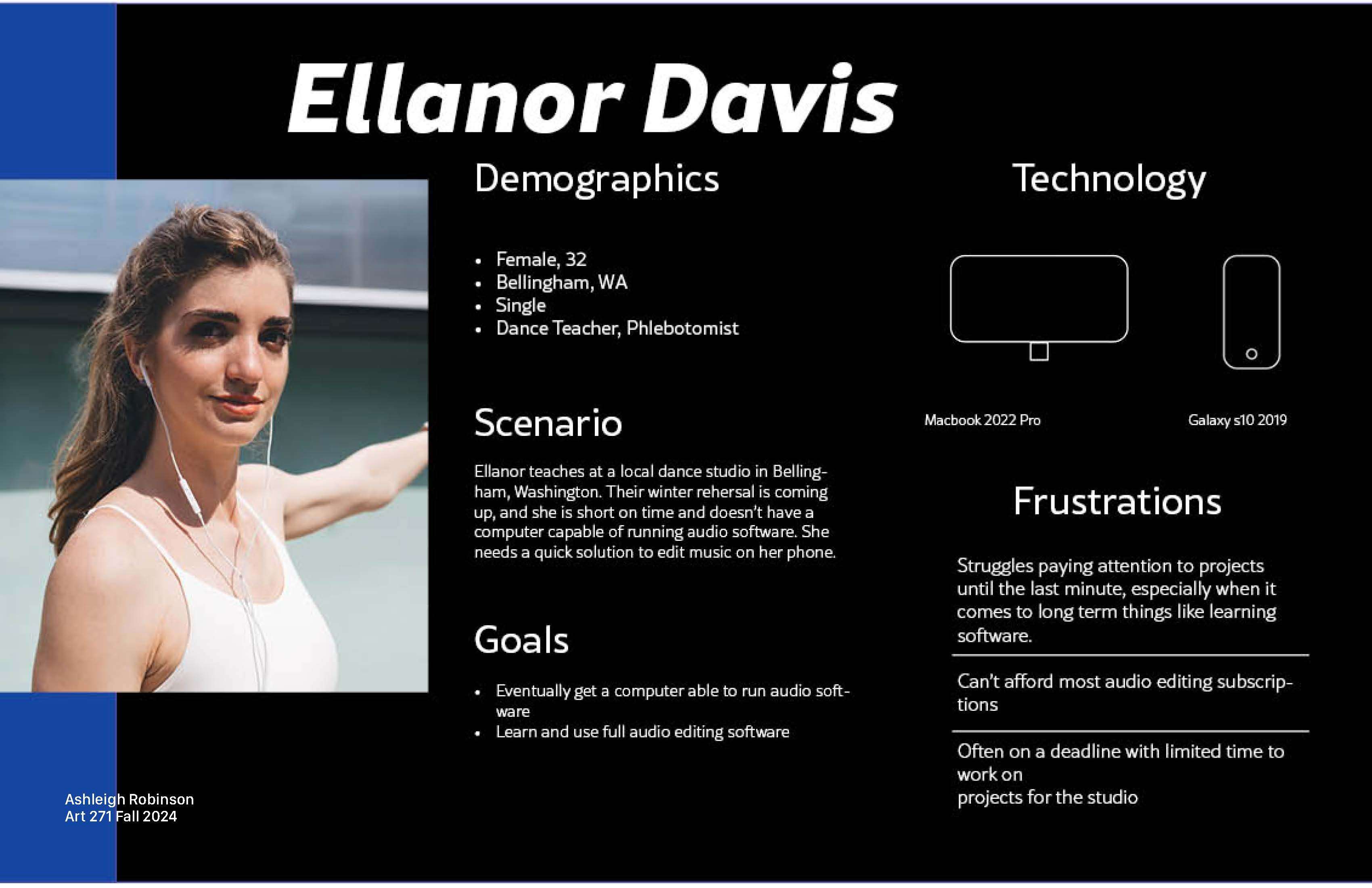
I conducted persona research using insights from three choreographers in Idaho and Washington. Each of these user interviews helped me understand the range of competency with different audio editing programs. These helped me create a more targeted persona reflective of what potential users would be doing.
Branding
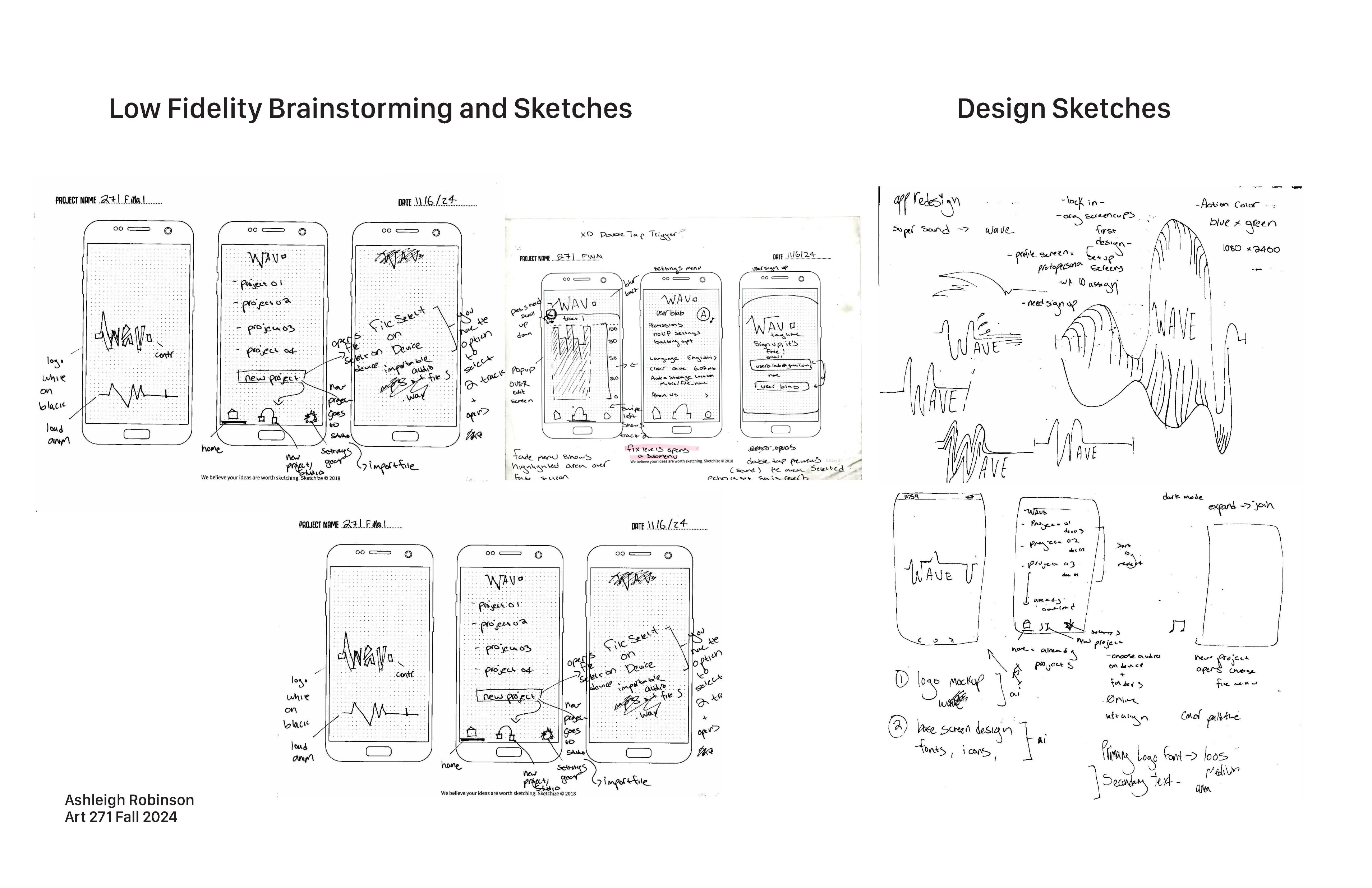
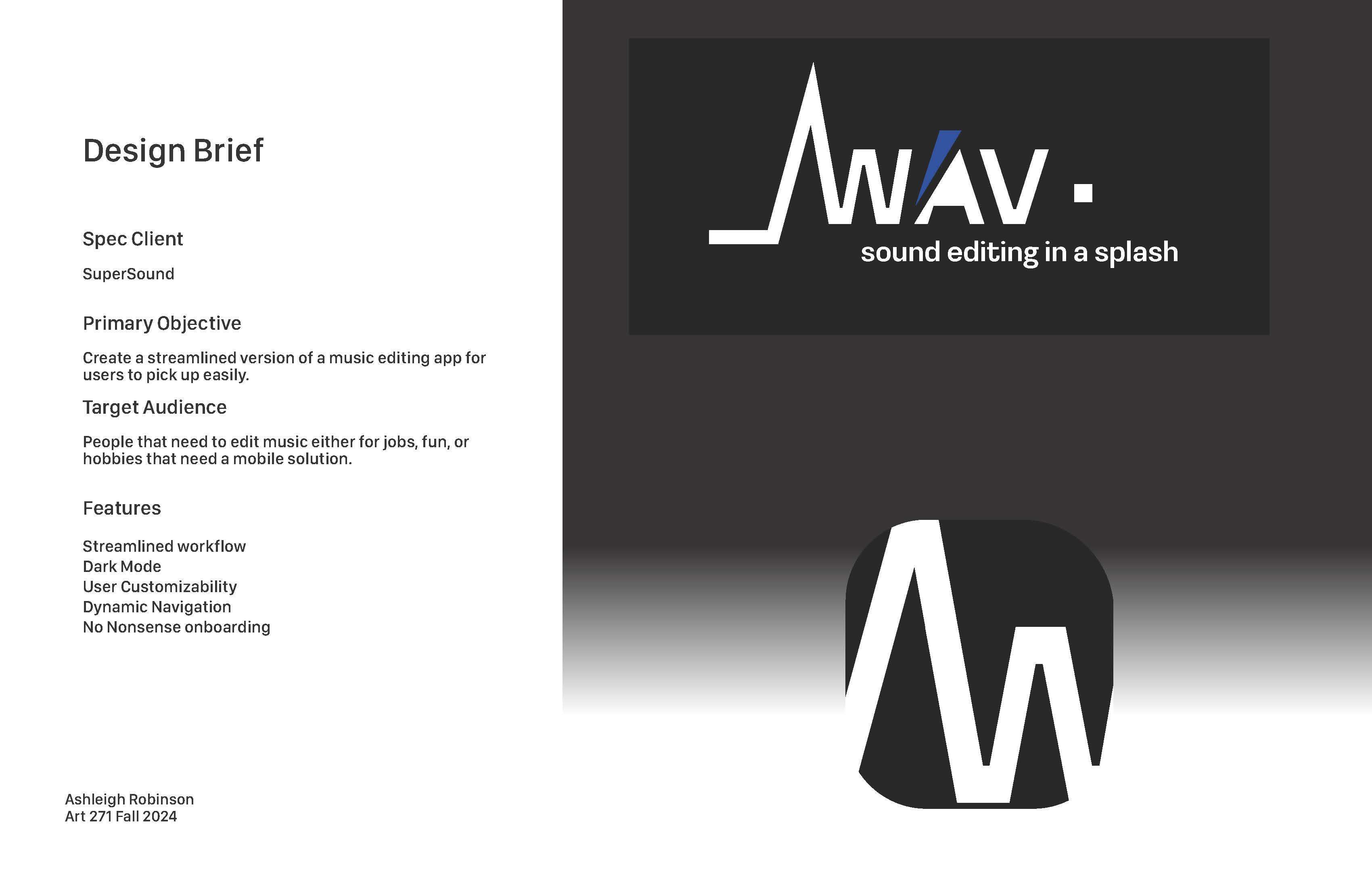
I needed my branding style to mimic the original app but improve it. Picking a blue action attention color, I named it .Wav as a play on words of the audio export format.
UI
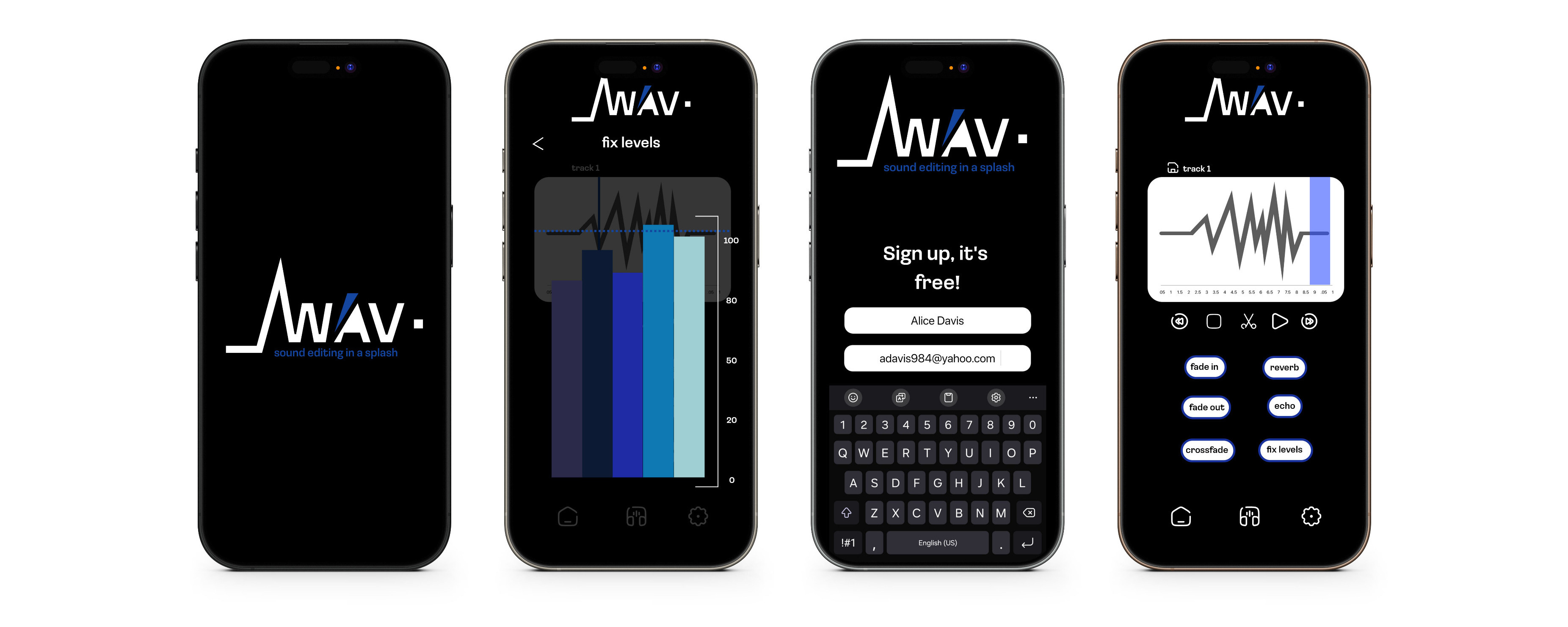
I built out a phone UI for easy music editing in dark mode, with an action attention in blue.
Key Takeaways
This was my first real project in Adobe XD where I was able to start implementing components and user research to create personas around. Introducing me to user research as an essential part of the process, showed me how to create clearer design decisions. Creating device-specific user flows pushed me to think more intentionally about how people move through an app and where friction can slow them down. Overall, this project laid the groundwork for how I approach interaction design today, emphasizing the importance of research and clear, user centered flows.